A CRM built around the way you work
We build a CRM that connects customer records, proposals, documents and tasks around your rules. Your team can follow the full history of a job and automate repetitive steps. You try the first version while development is still under way.
HOW WE START
The people who listen are the people who build
Together we follow an enquiry through to a proposal and a completed job. That workflow determines the fields, actions and views, helping staff find the information they need and move the work forward.

We begin by understanding the work
You explain the work directly to the people writing the code, from an incoming request through to a completed job. Together we identify where automation will help, which decisions need a person and what the system should make easier.
You can evaluate the first version by using it
Once we have agreed a useful first scope, AI assists coding and testing while your team tries the result in practice. That experience shapes the next version while the work is fresh in everyone’s mind.
Further development follows the work
More orders may call for more capacity, while a change in the way you work may require new capabilities. We assess those needs separately and extend functionality when there is a real task for it to serve.
WHAT WE CAN BUILD
The scope comes from the work your team needs to do
Whether the system covers sales, internal requests, documents, production or service delivery, we choose its functions around the work to be done, the people doing it and the result they need.
Customers and enquiries
Customer records, enquiries, files and a searchable history give your team the information it needs to make decisions and move work forward, with fields and views designed for those tasks.
Proposals and documents
We can bring AI-assisted proposal drafts, your pricing rules and PDF documents into the same process, with a person approving any output that commits you to a price or a promise.
Jobs and responsibilities
Assign jobs, name the people responsible, follow stages and collect the approvals your workflow requires. The team can see what is complete and whose action is needed next.
Connections to other tools
Connect the tools you already use. We plan each integration around a specific flow of information, so records can move automatically between the systems that need them.
VIMSTEAD FORMA · PROTOTYPE 0.1.0
Vimstead Forma extends the CRM into production planning
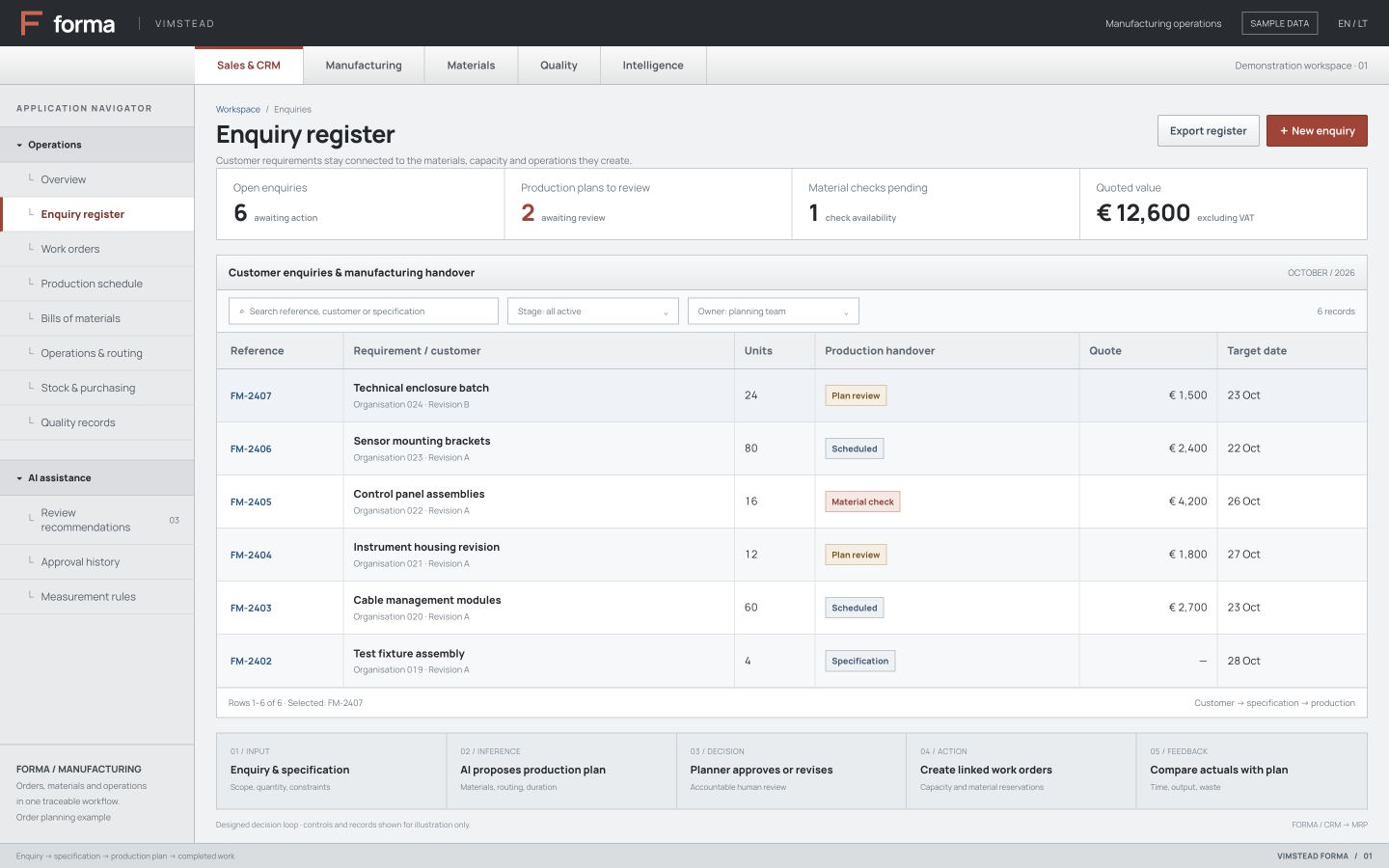
The Forma 0.1.0 prototype adds operation planning and work records to the existing CRM. Plans, progress, actual durations and notes stay with the same order and item, so the team does not need to enter customer or order details again.
The model suggests operation times for a planner to review and approve. The schedule accounts for operation order and work-centre availability. Actual-time records show where estimates need adjustment; predictions are checked against measurements of your work before deployment.
A planned phone interface would let an employee report progress, materials or an issue by voice, then confirm the prepared record. The illustration shows how an order register could connect customer enquiries, quotations and preparation for production. Visit the Forma page for current prototype screens and planned capabilities.
START WITH A FIRST VERSION
What would make a useful first release?
Tell us what your team needs to do better. We will work out a first scope, explain the cost and agree how you will judge the result.
That might mean preparing proposals faster, entering information once or seeing which tasks are overdue. We choose a result you can measure in everyday work and use it to guide the next stage.